
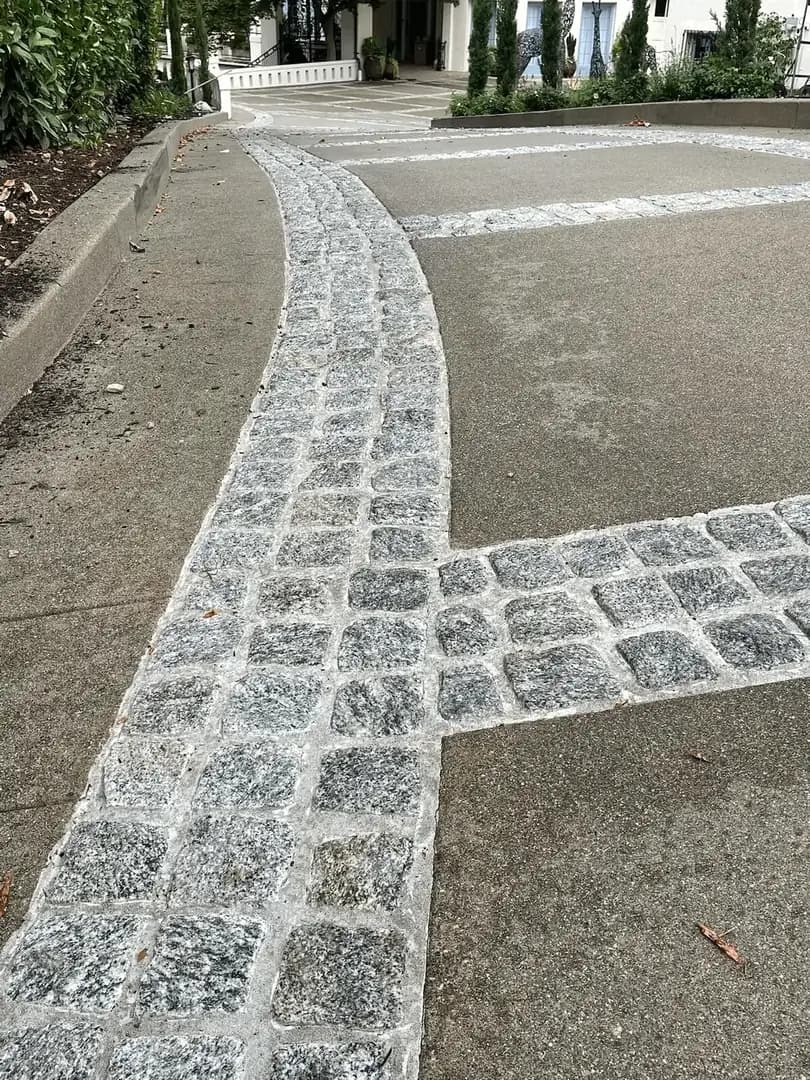
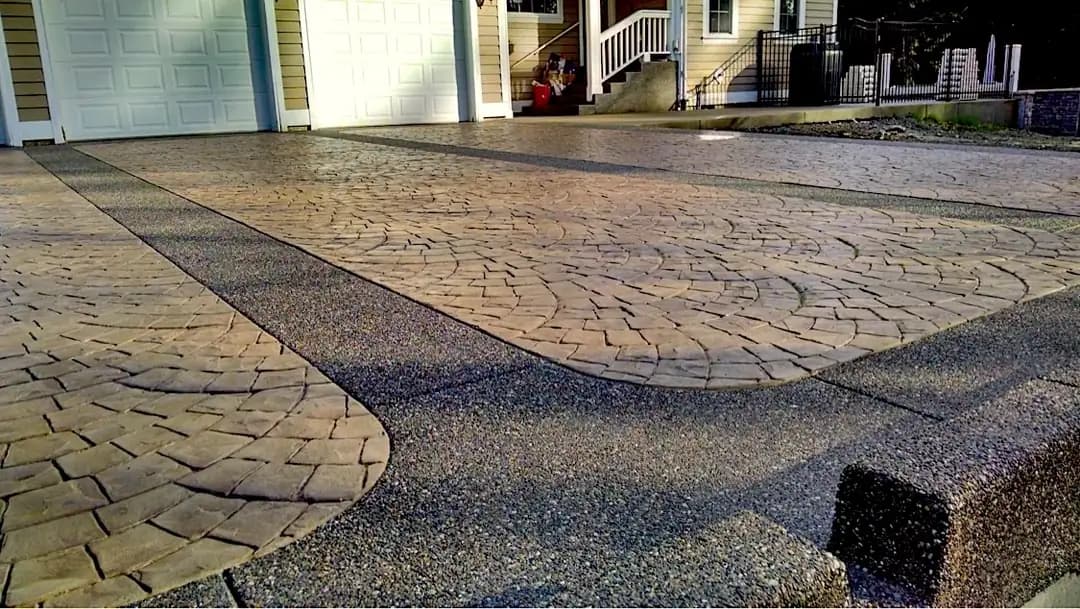
The final driveway combines warm aggregate with cool cobblestone.

A gracefully curving sand finish concrete driveway in Seattle is defined by an intricate grid of hand-laid cobblestone borders.
The final driveway combines warm aggregate with cool cobblestone.
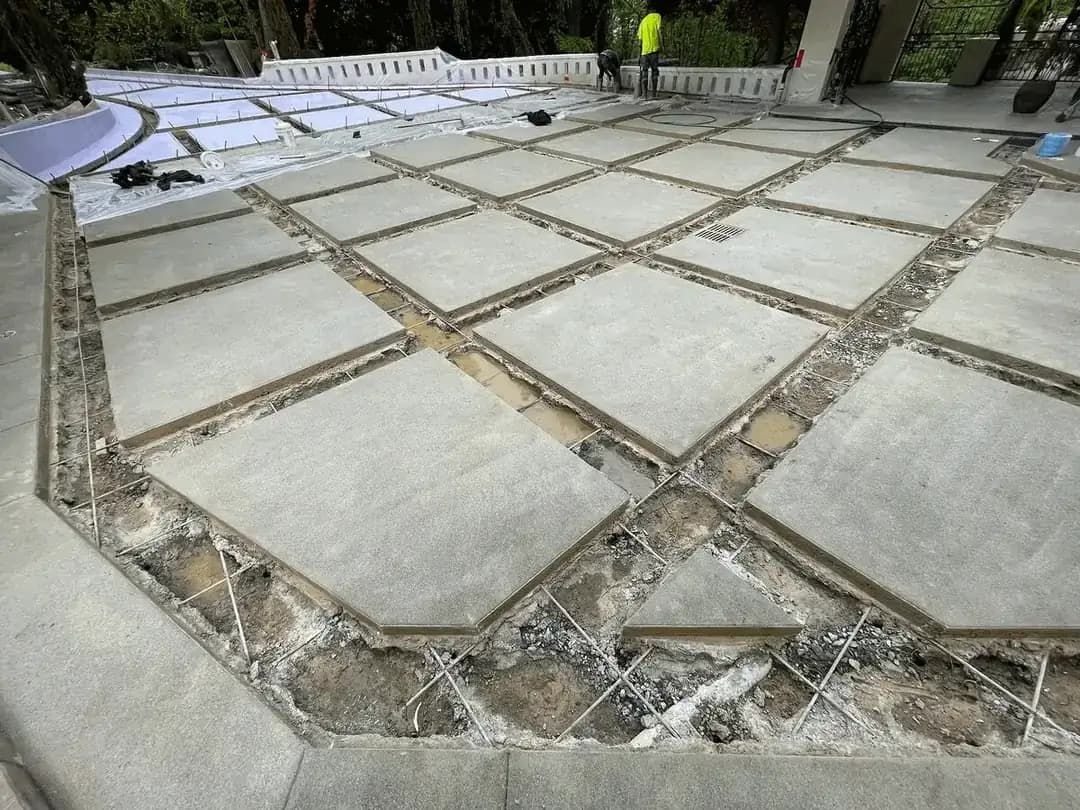
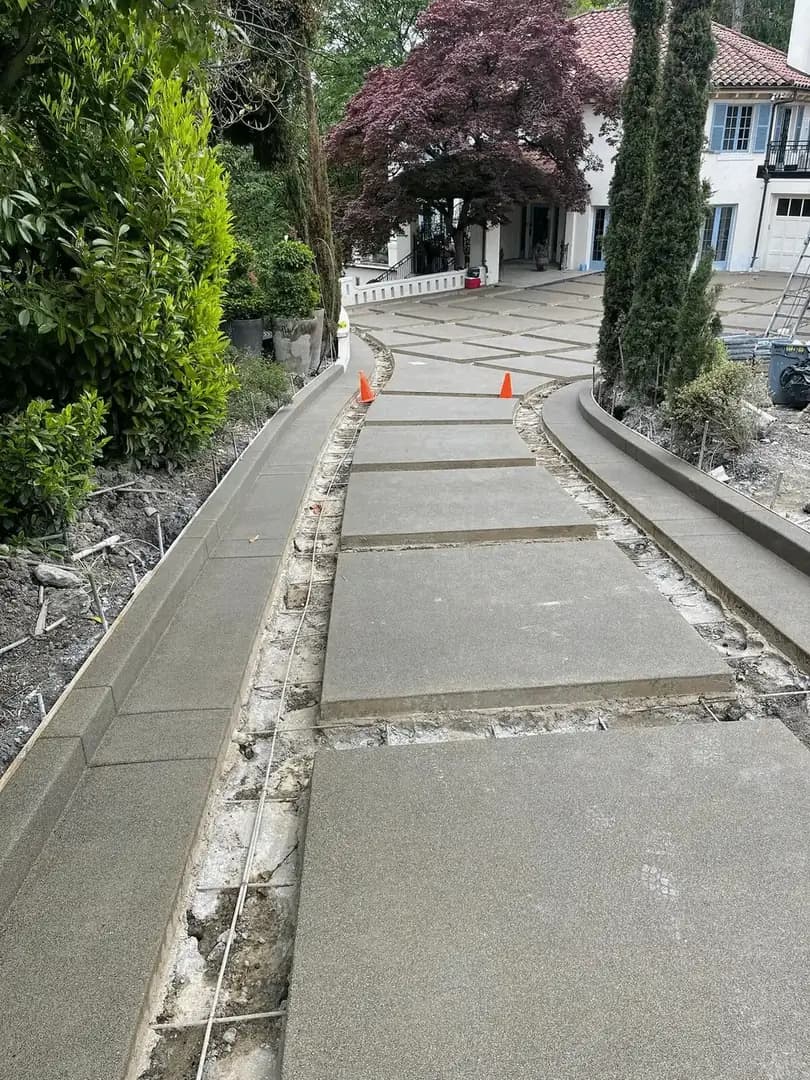
A grid of rebar reinforces the channels for the cobblestone inlay.
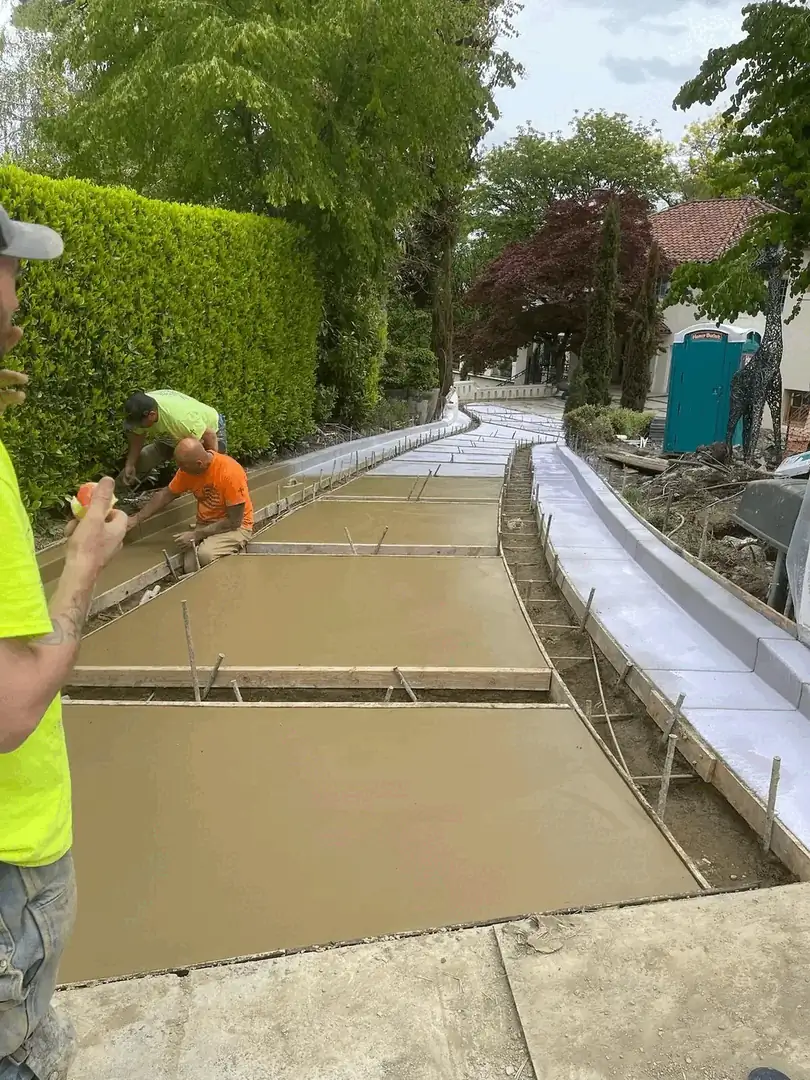
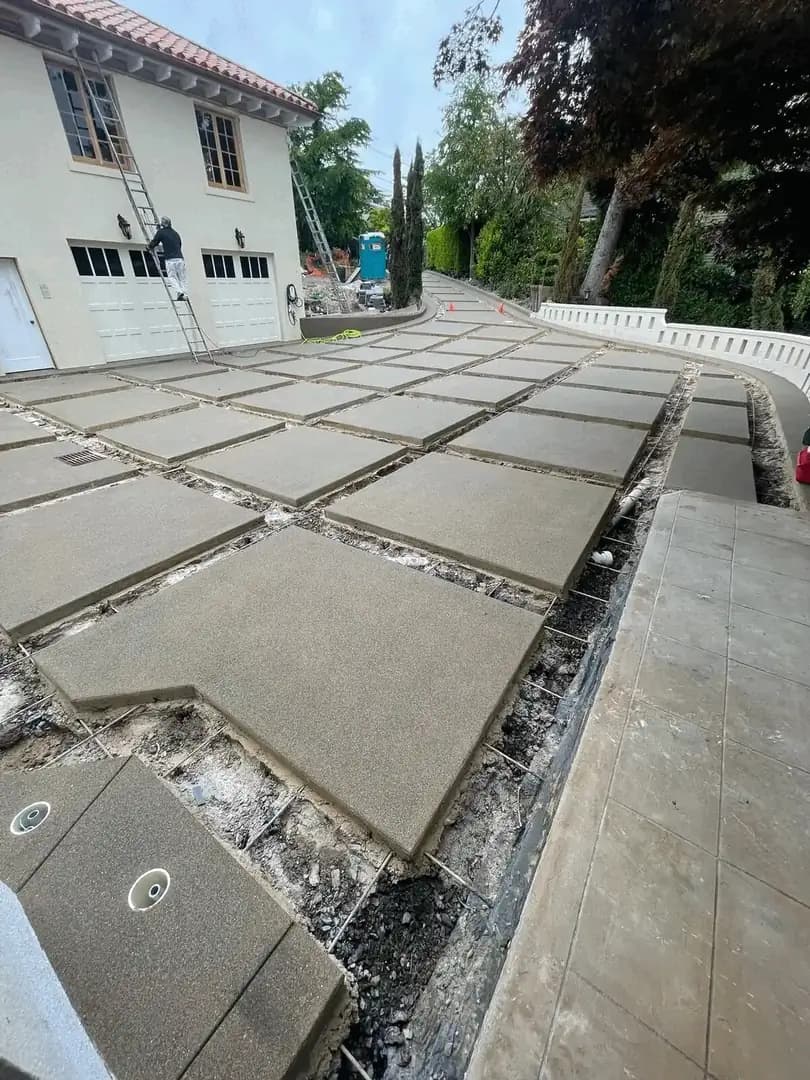
Pouring the warm-toned concrete mix into prepared forms.
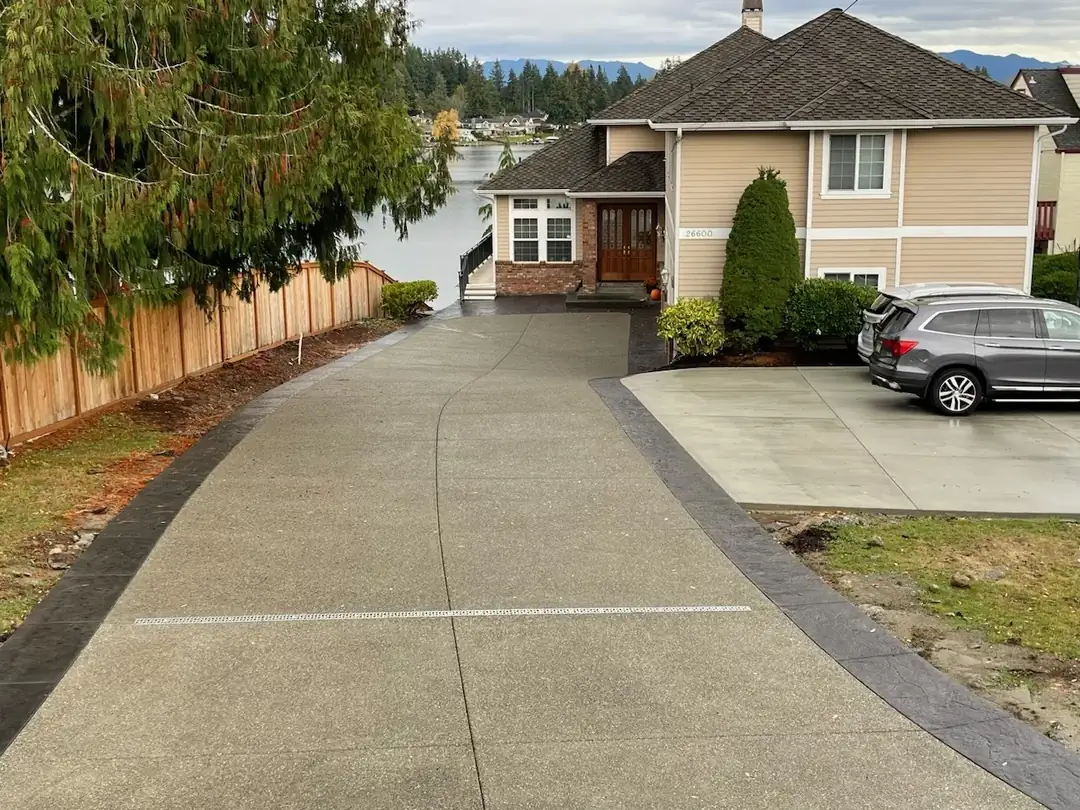
A gracefully curving sand finish concrete driveway in Seattle is defined by an intricate grid of hand-laid cobblestone borders. This project required a multi-stage installation, where individual concrete pads were carefully formed and poured, leaving precise channels for the stonework. The cool, gray tones of the cobblestone provide a striking textural and visual contrast, creating a sophisticated, old-world aesthetic. The craftsmanship is evident in the clean lines and the consistent reveal of the concrete surface. A centrally located channel drain is integrated into the design in front of the garage, ensuring effective water management without disrupting the geometric pattern. This method of combining poured concrete with traditional stone setting results in a durable and visually compelling entrance that complements the classic architecture of the residence.
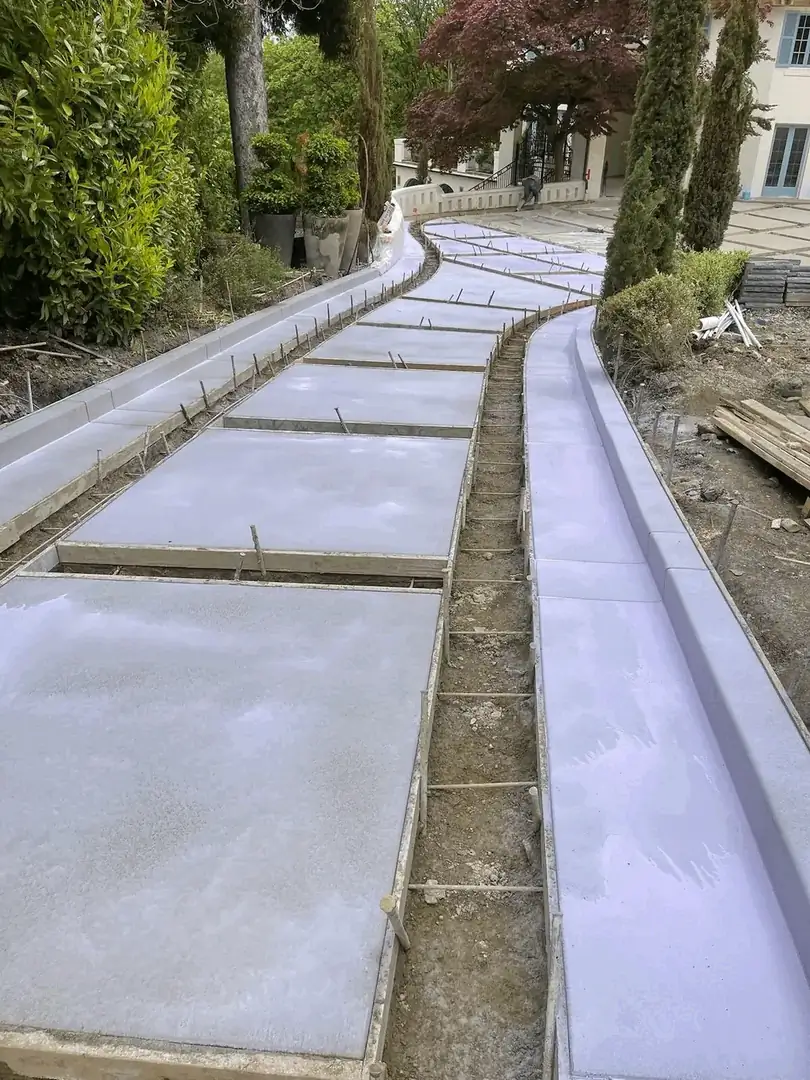
The new concrete begins to cure, showing a smooth, wet surface.
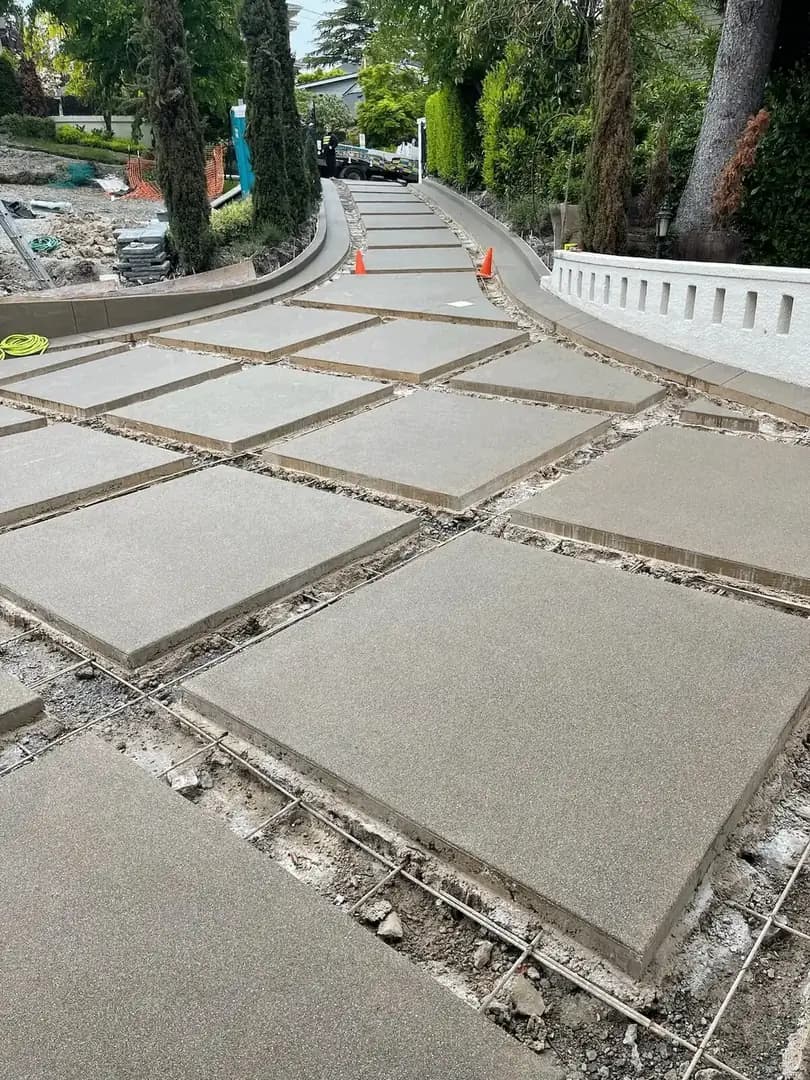
The panelized design is clearly visible during construction.
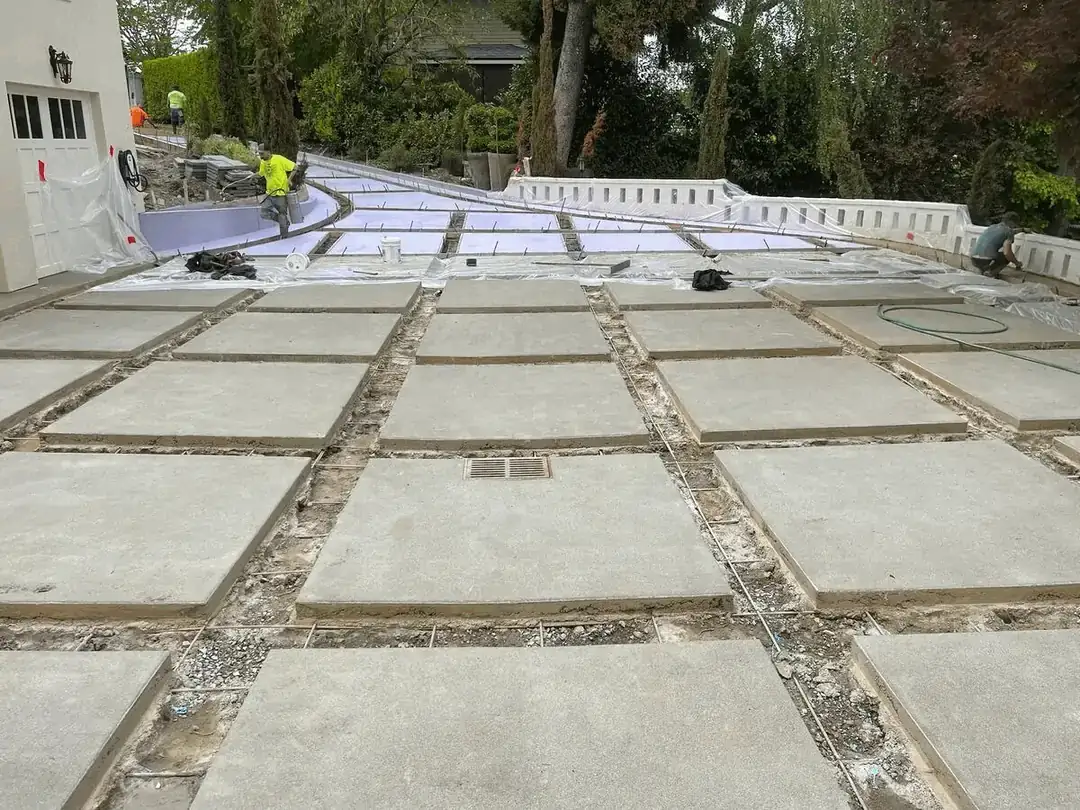
A channel drain is set into the concrete for water management.
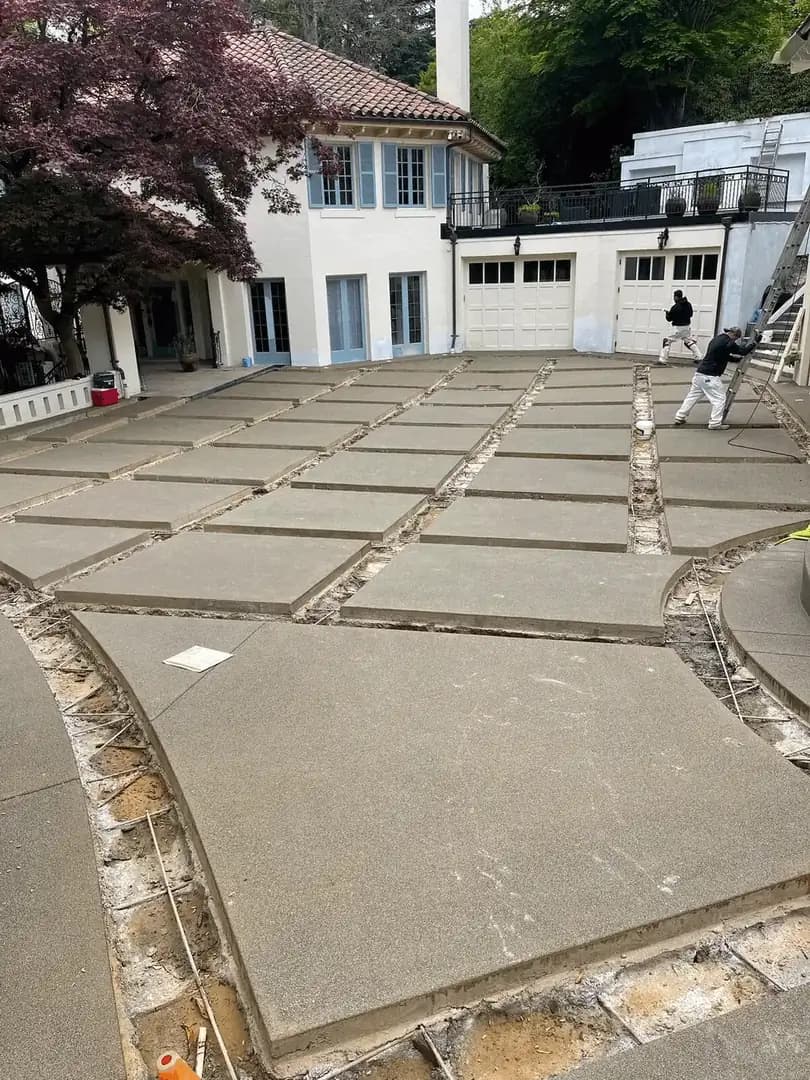
The geometric layout provides a grand entrance to the garage.
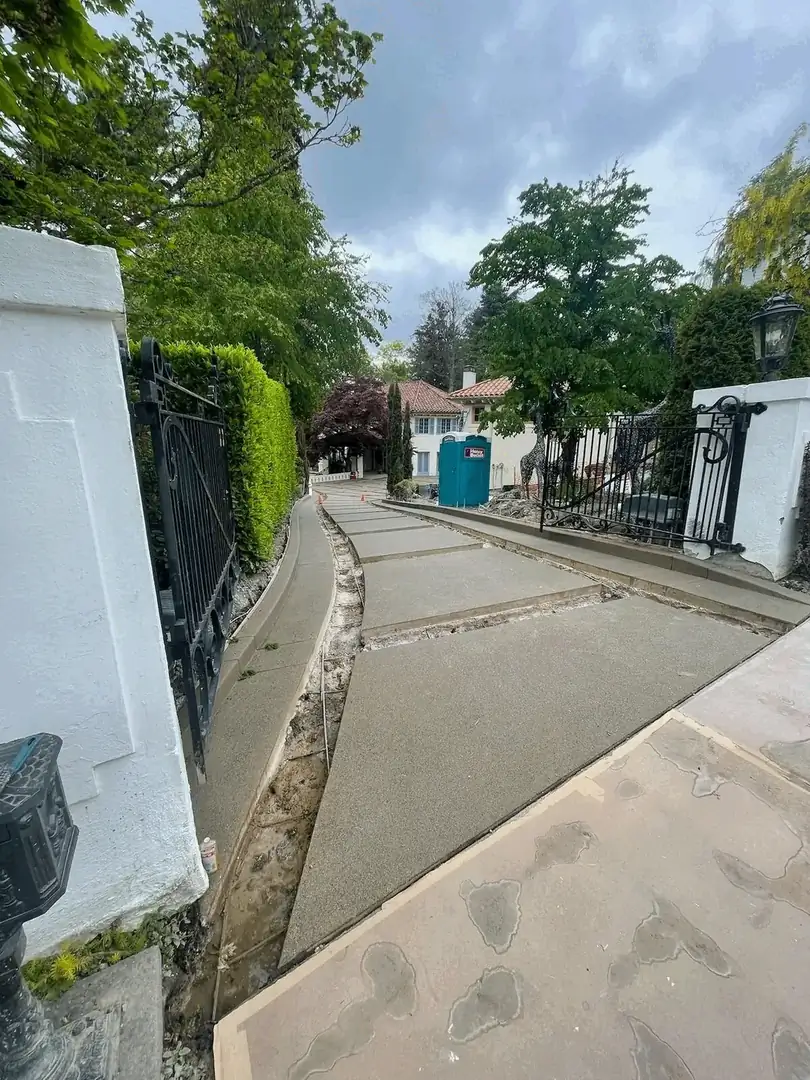
A view from the property entrance during the pouring phase.
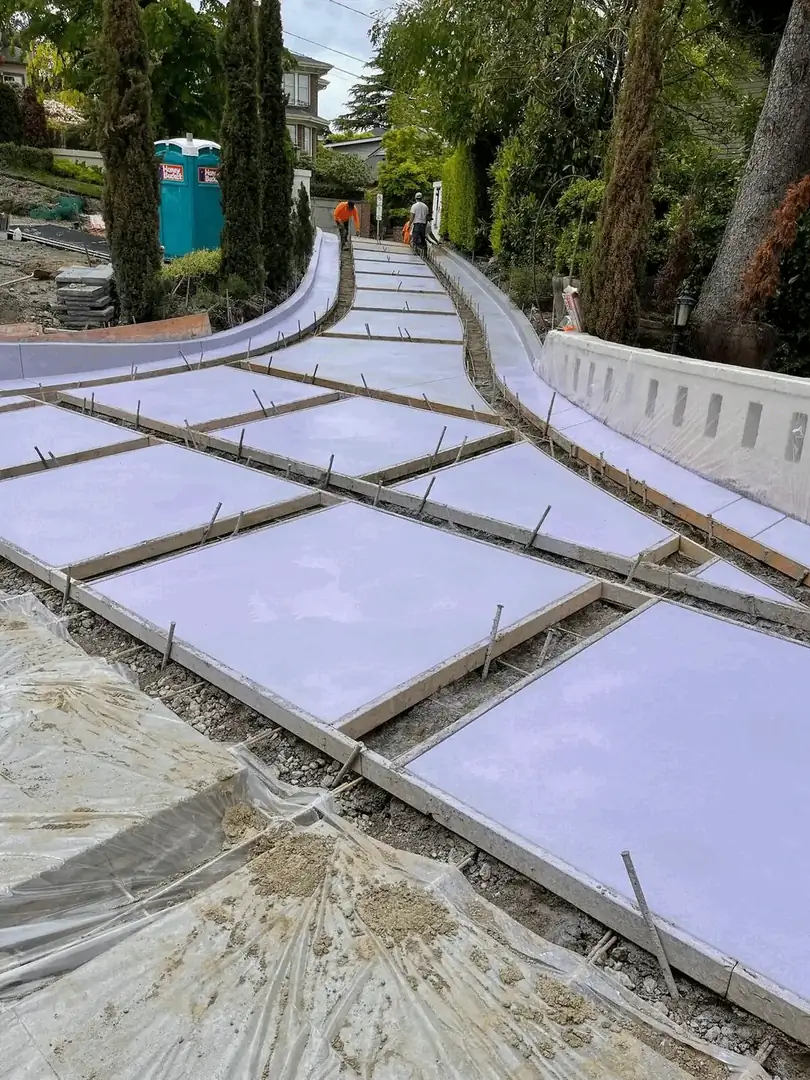
Careful finishing is key to achieving the final desired texture.
This design gives the look of a full stone driveway without the cost and maintenance of setting thousands of individual pavers. The concrete pads carry the structural load and handle vehicle traffic, while the cobblestone inlays are used strategically in the grid and borders for visual impact. You get the old world aesthetic and crisp pattern, but with fewer joints to shift, easier snow removal, and lower long term maintenance than a full paver field.
The driveway is broken into smaller concrete panels with intentional joints and a central channel drain at the garage. The slight slope directs surface water into that drain instead of allowing it to sit against the house or run across the garage slab. The grid layout also controls where the concrete moves during freeze thaw cycles, which reduces random cracking and helps the driveway stay flatter over time.
Yes. The structure you drive on is still a reinforced concrete slab designed for vehicle loads. The cobblestones sit in dedicated channels and are supported by the concrete edges and a compacted base. As long as the subgrade, reinforcement, and concrete thickness are engineered correctly, this style of driveway handles pickups, SUVs, and service vehicles just like a traditional concrete driveway.
Explore more concrete work similar to this project.
Seattle concrete projects often mean steep slopes, tight access and complex permitting. We plan and pour concrete driveway that meets local codes, manages drainage and looks clean on everything from Queen Anne hillsides to Ballard infill lots.
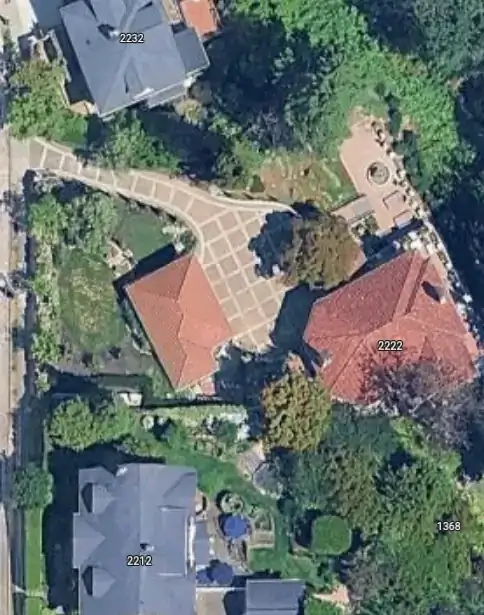
Note: Map shows the general project area for client privacy.
Get your free, no-obligation estimate today. We'll discuss your vision and provide expert guidance on your concrete project.